

Do you know what causes most stomach ulcers? Here’s a hint: it isn’t pepper soup, and it isn’t “eating too much spicy food.”
It’s a bacterium. One that roughly 7 in 10 Nigerians are carrying right now, most without knowing it.
For some people, that bacterium sits quietly for life and never causes a problem. For others, it slowly wears through the stomach lining until it becomes a burning pain that shows up after every meal – or, if ignored long enough, something far more serious.
Here’s what’s actually happening in your gut, how stress fits into the picture, and how to tell the difference between “this will pass” and “this needs a doctor today.”
Helicobacter pylori – H. pylori for short – is a spiral-shaped bacterium that burrows into the mucous layer protecting your stomach wall. Once it’s there, it weakens that protective lining, leaving the stomach tissue underneath exposed to acid.
Over time, that exposure can lead to two closely related conditions:
Peptic ulcer disease affects an estimated 1 in 10 Nigerians at some point in their lives. That’s not a rare condition you read about – it’s the person at your workplace who keeps “a small tin of antacid” in their bag, or the relative who swears off certain foods because their “stomach can’t take it anymore.”
The good news: H. pylori is treatable. A combination of antibiotics and acid-reducing medication clears the infection in the majority of cases. The problem isn’t that it’s untreatable – it’s that most people never get properly tested for it in the first place.
Antacids and over-the-counter ulcer medications reduce stomach acid. That can genuinely ease the pain for a few hours. What it doesn’t do is treat the underlying H. pylori infection or heal an existing ulcer.
This is how people end up in a loop: pain flares up, they take something to calm it down, the relief convinces them it’s handled, and a few weeks later the pain is back. Meanwhile, an untreated ulcer can slowly get worse. Left long enough, it can erode through a blood vessel (causing internal bleeding) or all the way through the stomach wall (a perforation) – both of which are medical emergencies.
Repeated self-medication also has a cost of its own. Long-term, frequent use of certain pain relievers – particularly NSAIDs like ibuprofen and diclofenac – is itself one of the leading causes of stomach ulcers, second only to H. pylori. In other words, the very medication some people reach for to manage stomach pain can, over time, be part of what’s causing it.
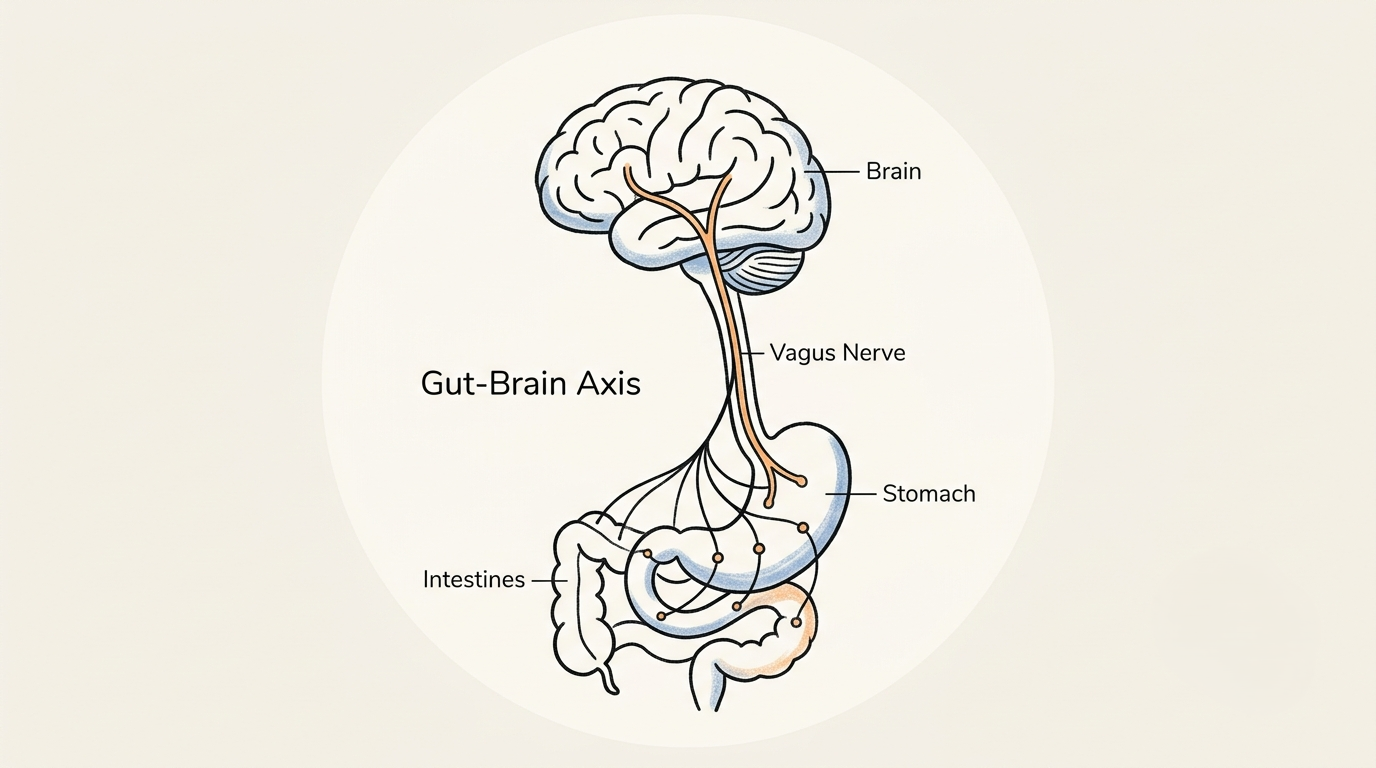
Stress doesn’t cause ulcers on its own – H. pylori and NSAID use remain the primary drivers. But stress is not a bystander either.
Your brain and your digestive system are in constant, direct communication through what’s known as the gut-brain axis. When you’re under sustained stress, that communication shows up physically in your stomach. Stress can:
This is likely why two people can carry the same H. pylori infection, and only one of them develops painful symptoms. Chronic stress appears to tip the balance – turning a low-grade, silent infection into one that actively hurts.
It also explains a pattern many people notice but don’t connect: stomach pain that reliably gets worse during exam season, a demanding work period, or a personal crisis, and eases up once things settle down.
Most stomach discomfort is unpleasant, not dangerous. But a smaller set of symptoms are a signal to get medical care immediately, not to wait it out:
These can point to a bleeding or perforated ulcer – both are medical emergencies where every hour matters.
One more thing worth knowing: stomach pain accompanied by a persistent fever can also be a sign of typhoid fever, a separate but common condition in Nigeria. If fever is part of the picture, it’s worth reading our dedicated guide on recognizing and treating typhoid alongside this one.
You can’t self-diagnose an ulcer from symptoms alone – gastritis, ulcers, and even other conditions can feel almost identical from the inside. A proper evaluation typically involves:
Once the cause is identified, treatment is often straightforward: antibiotics to clear H. pylori if present, medication to reduce stomach acid while the lining heals, and a review of any painkillers or other medications that may be contributing.
None of this requires an extreme diet. A few consistent habits go a long way:
Is stomach pain always caused by an ulcer?
No. Stomach pain has many causes, from indigestion and gastritis to gastroenteritis and stress. Persistent or recurring pain is what warrants a proper evaluation, rather than the pain itself.
Can H. pylori go away on its own?
It’s unlikely without treatment. Most people who test positive need a course of antibiotics combined with acid-reducing medication to clear the infection.
Does stress alone cause ulcers?
Not typically – H. pylori infection and long-term NSAID use are the primary causes. Stress worsens symptoms and can aggravate an existing ulcer or gastritis, but it’s rarely the sole cause.
If antacids are working, do I still need to see a doctor?
Yes, if you’re relying on them regularly. Antacids manage symptoms, not the underlying cause. Ongoing reliance on them is one of the clearest signs it’s time for a proper evaluation.

You don’t need to guess how serious your symptoms are, and you don’t need to manage them alone.
Your stomach usually signals a problem long before it becomes a serious one. The real question isn’t whether the pain will pass – it’s whether you’re listening to what it’s telling you.