
Somewhere between your third cup of coffee and a late-night deadline, your body is making decisions about sugar. Not the kind in your kitchen, the kind circulating in your bloodstream, quietly calibrating your energy, your mood, and over years of mismanagement, your long-term health.
Diabetes mellitus has become one of the most misunderstood chronic conditions of our time. People hear “diabetes” and think insulin injections and amputations, the dramatic end-stage outcomes. What they rarely picture is the slow, invisible drift that precedes it: the slightly elevated blood sugar after a high-stress month, the increasing fatigue that seems like ordinary busyness, the persistent thirst written off as dehydration from heat.
It is important to also know that Diabetes Mellitus is not the same as Diabetes Insipidus, a rare condition characterized by the inability of the kidneys to conserve water.
This piece is not a warning pamphlet. It’s a thorough, honest explanation of what diabetes mellitus is, how it develops, why modern urban life accelerates its risk, and, most importantly, what you can do to stay ahead of it.

Diabetes mellitus is a group of metabolic diseases characterised by chronic high blood sugar (hyperglycaemia), resulting from problems with how the body produces or uses insulin. The word “mellitus” comes from Latin for “honey-sweet“, a reference to the sweet urine that ancient physicians used to identify the condition.
To understand diabetes mellitus, you first need to understand insulin. When you eat, your digestive system breaks carbohydrates down into glucose, the simplest unit of sugar, and the primary fuel for every cell in your body. That glucose enters the bloodstream. In response, your pancreas releases insulin, a hormone that acts like a key, unlocking cells so glucose can pass from the blood into them and be used for energy.
In diabetes mellitus, this system breaks down. Either the pancreas isn’t producing enough insulin, or the cells have become resistant to it, or both. The result: glucose accumulates in the bloodstream instead of entering cells. Your cells starve while your blood becomes increasingly saturated with sugar, and over time, that excess sugar damages blood vessels, nerves, organs, and eyes.
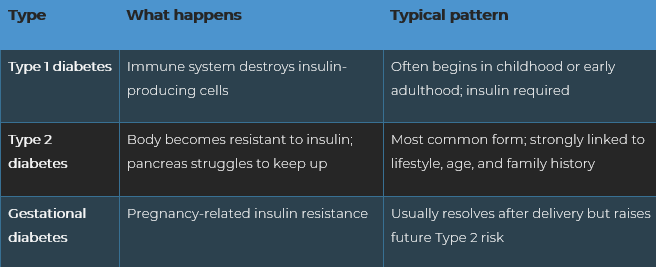
Diabetes is not a single disease. It exists across a spectrum with meaningfully different causes, progressions, and management strategies.
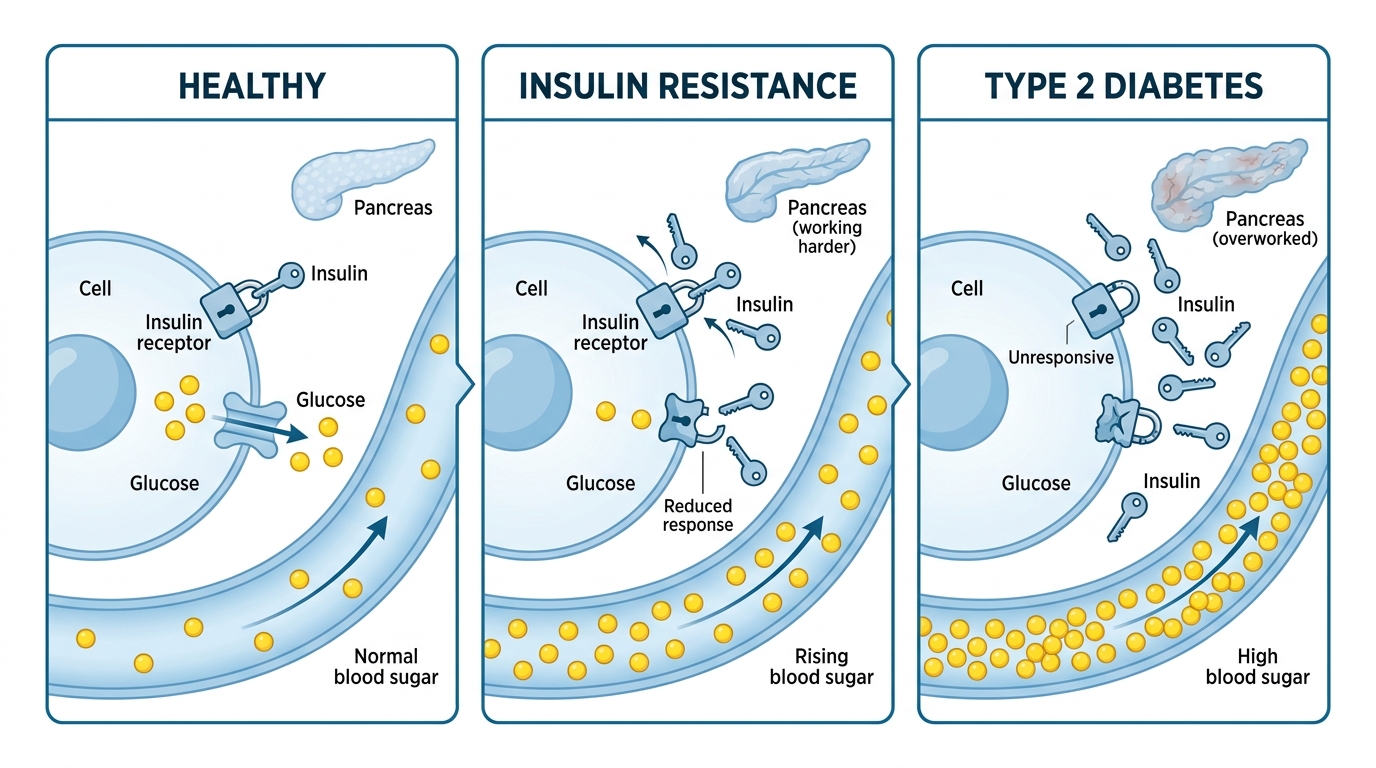
Type 2 diabetes usually develops gradually:
Excess fat, particularly visceral fat stored around the abdomen and organs, interferes with insulin’s ability to unlock cells. Cells become less responsive to insulin’s signal. The pancreas, detecting high blood sugar, produces more insulin to compensate. At this stage, blood glucose may still appear normal on routine tests.
As insulin resistance increases, the pancreatic beta cells work harder and harder. Over time, this chronic overwork causes them to become exhausted and eventually damaged. Insulin output begins to decline. Blood sugar starts creeping up, into the prediabetes range.
Fasting glucose sits between 5.6–6.9 mmol/L, or HbA1c between 5.7–6.4%. The body is clearly struggling, but reversal is still very achievable with lifestyle changes. Most people in this stage have no symptoms and are unaware of their status, which is why screening is so critical.
Fasting glucose reaches 7.0 mmol/L or above, or HbA1c hits 6.5% or higher. The pancreas can no longer compensate for the resistance. Blood sugar is consistently elevated. This is still manageable, but if left untreated, the clock starts on complications.
Chronically high blood sugar progressively damages blood vessels and nerves throughout the body. The smaller and more delicate the blood vessel, the more vulnerable it is, which is why the eyes, kidneys, and peripheral nerves are hit first, followed by the larger vessels of the heart and brain.
The narrative that diabetes mellitus is simply a consequence of eating too much sugar is both true and dangerously incomplete. Sugar is one input into a much more complex metabolic picture. Here’s what actually drives risk:
Dietary patterns
High-calorie diets rich in refined carbohydrates like white rice, bread, processed snacks, sugar-sweetened drinks, drive rapid blood glucose spikes, and contribute to weight gain. But it’s not just about sugar consumption in isolation. Total caloric intake, dietary fibre, meal timing, and food quality all matter. Ultra-processed food, designed to be hyperpalatable and easy to overconsume, is a significant driver.
Physical inactivity
Muscle is one of the most important glucose-disposal tissues in the body. When muscles are active, they absorb glucose from the blood in an insulin-independent way. Sedentary behaviour, and urban working patterns, with long commutes, desk-bound jobs, and minimal purposeful movement, dramatically reduces this glucose clearance mechanism and accelerates insulin resistance.
Obesity, especially abdominal
Body fat isn’t metabolically inert. Visceral adipose tissue (fat around the organs) actively secretes inflammatory molecules that directly impair insulin signaling. This is why waist circumference is often a more meaningful diabetes risk indicator than BMI alone. A waist circumference above 94cm in men and 80cm in women signals meaningful metabolic risk.
Genetics and family history
Having a first-degree relative with Type 2 diabetes increases your risk by two to three times. This doesn’t mean diabetes is inevitable, but it means your threshold for lifestyle vigilance must be lower, and your screening frequency should be higher.
Age
Risk increases significantly after age 35–40 as insulin sensitivity naturally declines, and the body’s metabolic efficiency reduces. However, Type 2 diabetes is increasingly being diagnosed in younger adults and even teenagers, a direct reflection of changing lifestyles.
Sleep deprivation
Less than six hours of sleep per night is independently associated with increased insulin resistance, elevated cortisol, disrupted appetite hormones (increasing hunger and cravings for carbohydrate-rich foods), and weight gain. Sleep is not a productivity trade-off, it is a metabolic necessity.
Ethnicity
Populations of African, South Asian, and Middle Eastern descent demonstrate higher susceptibility to Type 2 diabetes, and develop metabolic complications at lower body weights compared to populations of European ancestry. This means that BMI thresholds used in Western clinical guidelines may not adequately capture risk for many Nigerians. Risk stratification needs to account for this.
The stress-diabetes connection: a critical modern risk factor
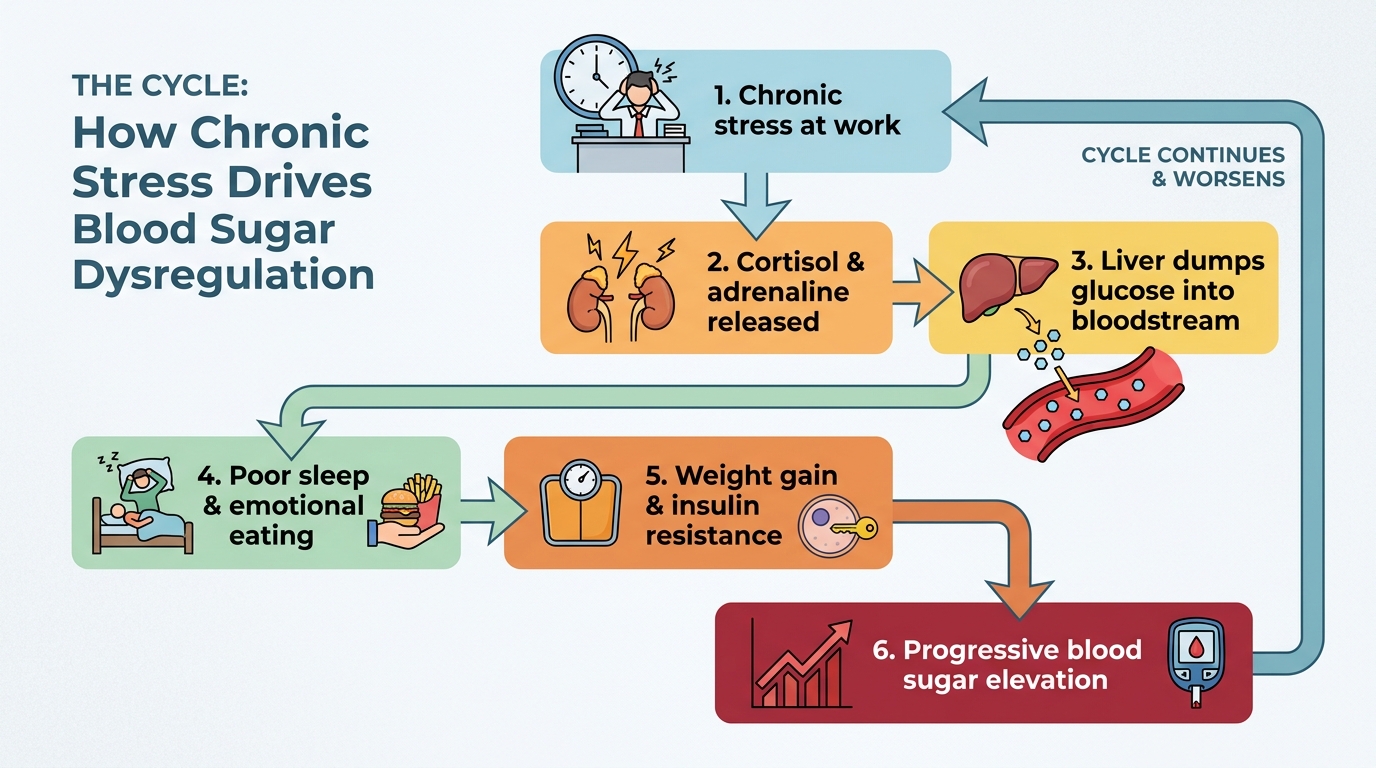
Chronic psychological stress, the kind endemic to the modern urban professional, directly impairs blood sugar regulation through two mechanisms.
First, stress hormones (cortisol and adrenaline) trigger the liver to release stored glucose into the bloodstream (a primitive fight-or-flight survival response). When stress is persistent, blood glucose remains chronically elevated.
Second, stress disrupts sleep, triggers emotional eating, reduces motivation for exercise, and increases cravings for high-calorie comfort foods, all of which compound insulin resistance.
The irony is that the very lifestyle designed around achievement, long hours, high pressure, deadline-driven performance, poor sleep, is systematically degrading the metabolic health that sustains that performance over a career.
Type 2 diabetes is famously asymptomatic in its early stages. This means that blood sugar can be elevated for years with no obvious signs. When symptoms do appear, they are often dismissed as tiredness, stress, or simply “getting older.” Classic diabetes symptoms include:
Research consistently shows that waiting for symptoms to appear before testing is one of the primary reasons diabetes goes undiagnosed for years. By the time symptoms become noticeable, blood sugar has typically been elevated for five to seven years, and organ damage may already be underway. Screening tests, not symptom monitoring, are the only reliable detection strategy.
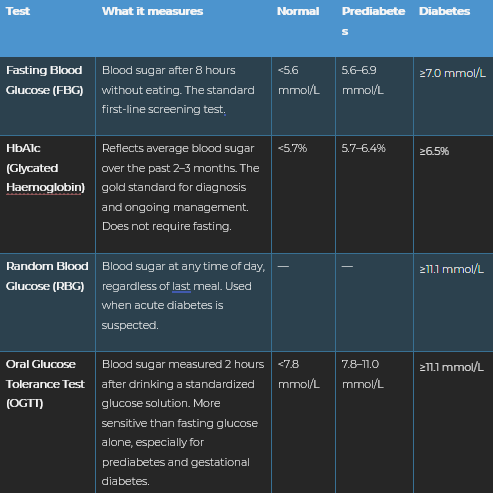
If your initial screening is normal and you have no risk factors, repeat every three years. With risk factors, annually or as advised by your doctor. If prediabetes is detected, HbA1c monitoring every six months is prudent.
A single glucose reading can be affected by what you ate that day. HbA1c gives a longer-term view. For people already living with diabetes, periodic HbA1c reviews at a good healthcare center can help determine whether treatment plans, medications, and lifestyle changes are working effectively.
Diabetes mellitus itself is manageable. The complications of poorly controlled diabetes are where the genuine human cost lies, and they are entirely preventable with consistent care.
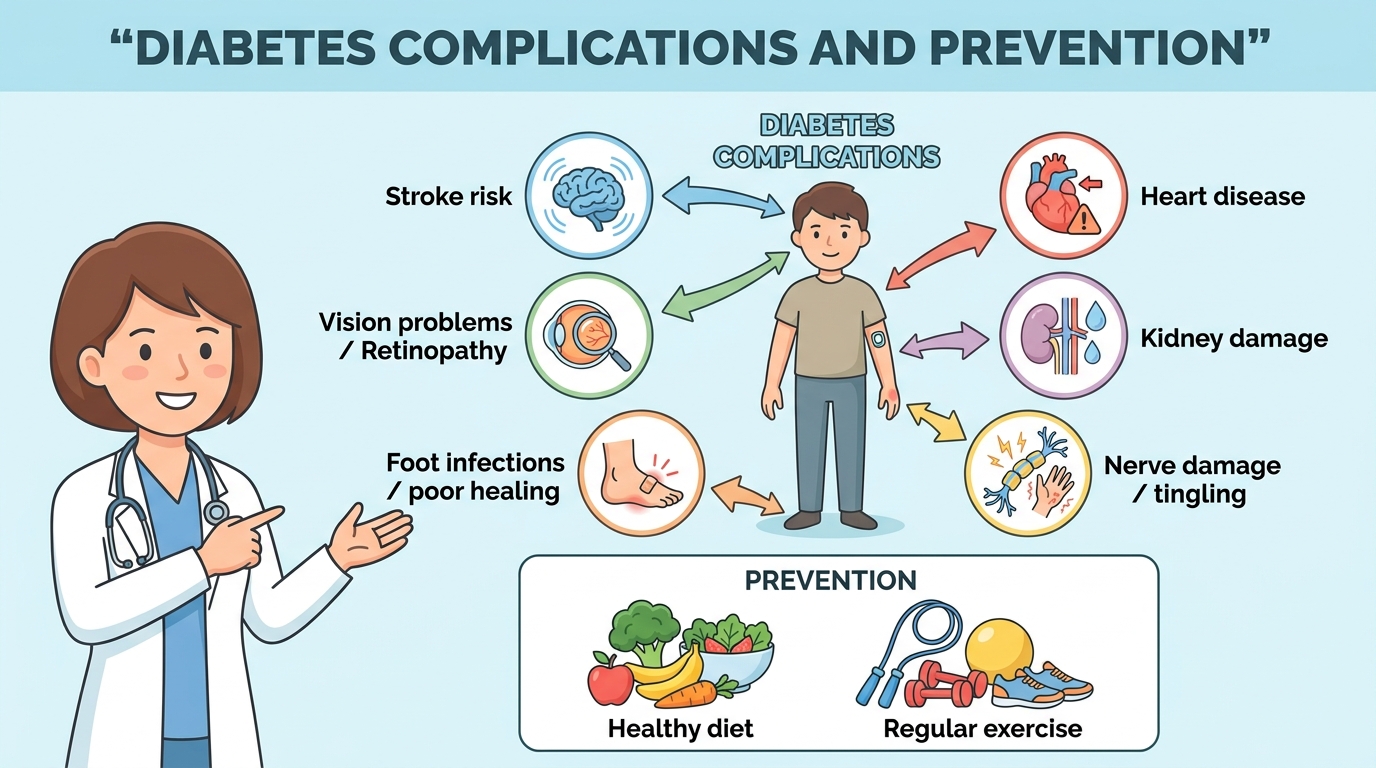
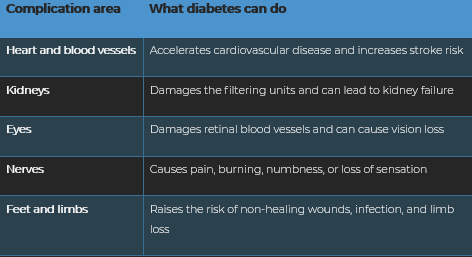
These complications usually develop gradually after years of uncontrolled blood sugar. Regular follow-up with primary care physicians and endocrinologists is one of the most effective ways to prevent disease progression. At qualified hospitals like Reliance Family Clinics, patients can access ongoing monitoring, specialist consultations, and coordinated care plans aimed at reducing long-term risks.
Good diabetes care is not about perfection. It is about consistency across several areas.
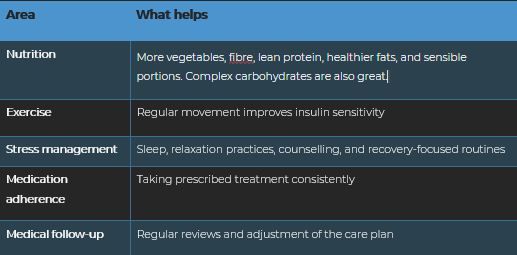
Busy schedules, forgotten refills, and work pressure often interrupt treatment. Medication delivery services such as Reliance Health’s medication delivery service can help remove some of those barriers by ensuring prescriptions arrive when patients need them.
Undiagnosed diabetes can quietly affect productivity, absenteeism, healthcare costs, and employee wellbeing. Workplace blood sugar screening programmes and diabetes awareness sessions can identify risks early while encouraging healthier habits across teams.
You can get onsite blood sugar screenings, follow-up pathways, and workplace health talks focused on diabetes awareness and prevention through qualified healthcare providers like the Reliance Family Clinics.
Diabetes mellitus, especially Type 2 often develops silently, but it does not have to progress silently. Whether you are worried about your own risk, already living with diabetes, or responsible for employee wellbeing, the biggest leverage points are still the same: early screening, consistent follow-up, lifestyle support, stress management, and medication adherence.
If you have not checked your blood sugar recently, diabetes screening and, where appropriate, an HbA1c review at a Reliance Family Clinic can help establish where you stand before symptoms force the issue.
Note: This article is educational and does not replace personalized medical advice. Anyone with symptoms of diabetes, very high blood sugar readings, unexplained weight loss, severe dehydration, chest pain, or sudden vision changes should seek medical care promptly.
Read more: Gut Health Matters: From Stress to Stomach Pain and Diabetes in Nigeria: Signs, Causes, Prevention and Treatment.